
What is holistic therapy?
A holistic approach to mental health, in simple terms, means taking all aspects of the person’s lives into account by addressing health as an interconnected system of thoughts, emotions, biology, and social, physical, spiritual and cultural environment. In practice, this means promoting overall wellness and focusing on prevention, rather than treating a single symptom in isolation, viewing it is a complex and multifaceted phenomenon that rarely has a single cause.
A common myth is that holistic therapy is somehow “less scientific.” In reality, holistic therapy can (and should!) use evidence-based treatments.
The biopsychosocial model
The foundations of true holistic therapy lie in the biopsychosocial model of mental health, which posits that mental health is shaped by an interaction between three domains:
- Biological factors – this includes genetics, physical health, sleep, nutrition, exercise, medication, substance use, brain chemistry, hormones. If you are in pain, sleep deprived, haven’t eaten a vegetable or gone at least on a short walk in days, it’s difficult to feel positive emotions or connect with friends.
- Psychological factors – this is your thoughts, emotions, behaviors, coping styles, core beliefs, trauma history, stress management. If your stress level is sky-high, mood is low and thoughts are racing, it can be difficult to sleep, eat or otherwise take care of your physical health, and to socialize with others.
- Social factors – this includes your relationships, identity, religion or spirituality, community, discrimination/marginalization, socioeconomic status, work/study environment. If you can’t meet your basic financial needs, experience discrimination in your community, have a toxic work environment or are fighting with a close friend, it becomes very difficult to promote your physical or psychological health.
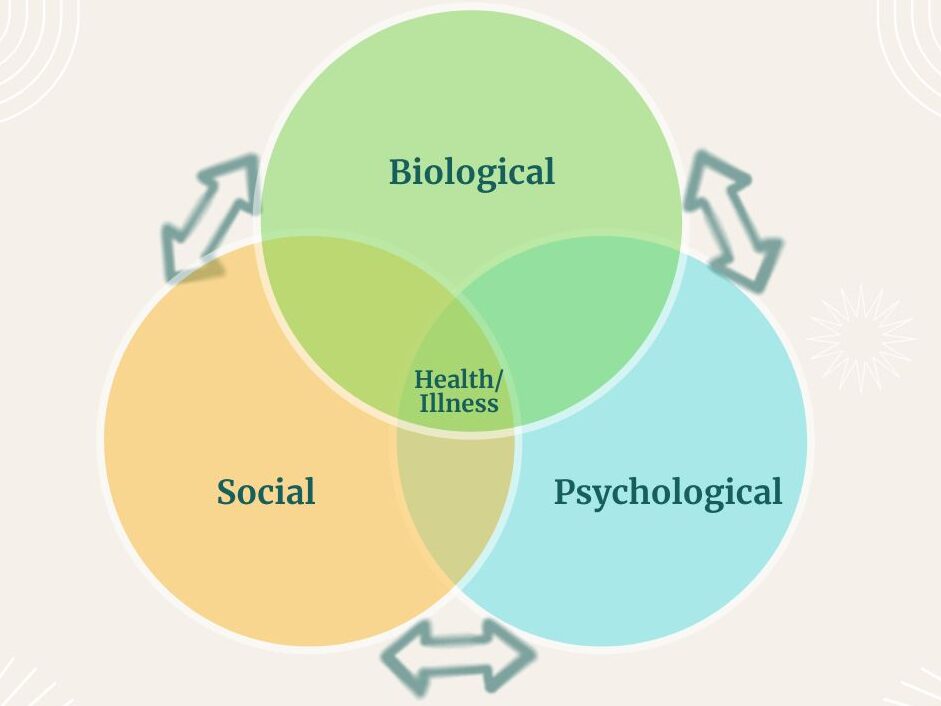
Instead of asking: “What’s wrong with you”?, we want to ask “What happened to you, and what is happening to you now to cause your symptoms?”
Take someone with anxiety, for example. Their symptoms might be influenced by biological factors such as a genetic predisposition (biological), perfectionistic thinking (psychological), and high pressure at work (social). Holistic therapy aims to address all of these.
Let’s now take a look at how holistic therapy can address these different factors.
Psychological factors
Starting with the obvious, therapy is of course best suited to address psychological factors contributing to the symptoms. Therapy can help with modifying unhelpful thoughts, regulating intense emotions, as well as challenging negative core beliefs, treating symptoms of post-traumatic stress disorder, and learning new coping and stress management skills.
Think: therapeutic approaches such as cognitive-behavioral therapy, acceptance and commitment therapy, schema therapy and EMDR. But, a holistic approach may also integrate yoga, breathwork, mindfulness practices here.
Biological factors
A holistic approach also aims to address changeable biological factors. In therapy, this takes place mainly in the form of helping clients make lifestyle changes: improving their sleep, nutrition and exercise habits, and reducing or regulating substance use. These factors are not to be underestimated: the impact of a healthy lifestyle on our mental health is massive, and this is why it is important to address these factors in therapy as much as possible.
Sometimes, it’s easy to make these changes, but other times, it can be very challenging. For example, Problems with sleep may require intervention, such a CBT-insomnia, or in some cases, medication. Exercise can also be very difficult to start if you are suffering from depression, so it might be that some other factors may have to be addressed first. Therefore, medication belongs to this category as well, and can be a very important part of a holistic treatment approach in many different situations.
Social factors
Therapy cannot change your immediate environment, but it can help you make useful changes. For example, you can learn to set boundaries with others, learn social skills to help you integrate into your community, and practice conflict resolution skills to help manage your close relationships and improve your work environment.
Bringing it all together
Let’s return to our example of anxiety. A holistic treatment plan for this case might include the following:
- Cognitive-behavioral therapy
- Exercise programme
- Sleep education and training
- Reducing workload where possible
- Medication
- Breathing exercises and other coping skills
Ideally, of course, treatment would take place in a multidisciplinary team that would include a psychologist, psychiatrist, personal trainer and nutritionist, who all collaborate to get the best possible treatment outcome. In practice, this is unfortunately rarely possible, and this is why it’s so important for a therapist to address the person as a whole, and make appropriate referrals or recommendations to other practitioners where relevant.
Collaboration
Another significant aspect of holistic therapy is that the client is an active participant in their own treatment. Together, the therapist and client will:
- Set values-based and realistic goals for therapy
- Adjust approaches in the process based on what is or isn’t working: this is where ongoing feedback is so important!
- Revisit goals or expectations as life circumstances change
Honesty from both parties is paramount: the client is responsible for doing their part of the work and communicating what works, as the therapist is responsible for using evidence-based practices, adjusting based on client needs, and ending therapy and referring out if they feel unable to help sufficiently.
Therapy can’t fix everything
An important tenet of holistic practice is also the understanding that therapy is not a miracle solution, and in some cases, might even be counterproductive. Therapy cannot, among other things:
- Remove systemic stressors like housing insecurity, financial stress, visa issues, or discrimination
- Replace medical care when it’s needed
- Undo burn-out caused by ongoing overwork
- Compensate for lack of community or social support
It is also important to keep in mind that as it is now, therapy is a privilege that not everyone can afford. Barriers such as long waiting lists, lack of providers, lack of insurance and high costs of private therapists are not to be understated. Additionally, disability, neurodivergence, unsafe home environments or stigma can serve as significant accessibility concerns as well. Therapists can, and should aim to address these barriers, for example, by using needs-based pricing and working to improve the accessibility to improve their physical and online spaces. However, that does not address all these barriers.
How to practice holistic care on your own
1. Think in systems
This means moving away from single-cause explanations for your symptoms. Instead of focusing only on what you are feeling, try to reflect what might be contributing to it across different domains. Even if there is a main cause, exploring contributing factors can still make a difference, especially if the main cause cannot be eliminated or changed.
You might ask, for example:
- Have there been any changes to my sleeping patterns?
- Have I been more isolated from friends and family?
- Am I in more pain than usual?
- Am I using substances more frequently?
Once you’ve identified changes or potential contributing factors, it’s time to get honest with yourself and see what you can work on. For example, you might not be able to improve your sleep times due to night shift work, but what you can do is improve your sleeping conditions, and use bright light therapy to help your circadian rhythm adjust. Similarly, you might be able to reduce alcohol consumption.
2. Address lifestyle factors
Mental health is inextricably linked to sleep, physical activity, nutrition and substance use. However, from a holistic lens, it’s important to avoid perfectionism or developing rigid rules: trying to optimize your entire life can actually lead to increased stress, obsessive and inflexible thinking, and shame and self-punishment when you ‘fail’ (e.g., don’t meet your steps goal for the week). Something is always better than nothing!
Rather than aiming for optimal habits, try asking yourself?
- Under current circumstances, what can I realistically change?
- What feels like it’s having the most impact right now?
When making lifestyle changes, it’s also important to go slow. Pick one habit at a time, and slowly build from there to avoid becoming overwhelmed.
3. Build psychological skills
There are many skills and tools you can use on your own to help increase self-awareness and notice your patterns. For example:
- Journaling – this can mean simply writing about your day, stream-of-consciousness/emotional dumping type writing, gratitude journaling, or following specific prompts.
- Practicing self-compassion
- Focusing on emotion regulation skills
4. Prioritize social connection
Social factors are among the strongest predictors in positive mental health outcomes. With loneliness and lack of community on the rise, holistic self-care includes intentionally seeking out belonging and connection.
This means making plans with friends and loved ones, seeking out community and third spaces where possible, and setting boundaries with people and spaces that consistently make you feel unsafe or unworthy. It means sharing what’s on your mind, allowing yourself to be vulnerable with your people, and allowing them to be vulnerable with you.
This also means (without abandoning yourself) showing up for others when you’d rather be doing something else, and sometimes putting yourself in situations that can at first feel a little uncomfortable or scary.
Self-care might not be enough (or it might feel too difficult), and this is where seeking therapy can be very beneficial.
So, what does holistic therapy really mean?
In practice, it looks like:
- Seeing you as whole person, not as a diagnosis or symptom
- Combining traditional forms of therapy with a variety of other interventions and practices
- Personalizing treatment to each individual
- Focusing on improving overall quality of life and wellbeing
- Working together to find solutions
If you’re curious about holistic, evidence-based therapy in Leiden, reaching out to a licensed psychologist can be a great idea.
References
Bolton, D. (2023). A revitalized biopsychosocial model: core theory, research paradigms, and clinical implications
Bourke, M., et al. (2025). Clusters of healthy lifestyle behaviours are associated with symptoms of depression, anxiety, and psychological distress: A systematic review and meta-analysis of observational studies
Chen, W.-J. (2016). Frequent exercise: A healthy habit or a behavioural addiction?
Harandi, T. F., et al., (2017). The correlation of social support with mental health: A meta-analysis
Patterson, E. H., et al. (2025). Public psychology and holistic approaches to prevention and treatment of depression