Tag: The Netherlands

  • How to work with your brain (not against it)

    How to work with your brain (not against it)

    “You just need to try harder. Focus better. Be more motivated”.

    Discipline, effort, pushing through, doing whatever it takes. How many of us have constantly been surrounded by these types of messages, and how many of us talk to ourselves that way? With self-improvement culture and the “lock-in” mentality on the rise (especially on social media), it can feel incredibly frustrating when ‘just trying harder’ seems to not bring you any closer to your goals, and definitely nowhere near happiness or satisfaction. This rings especially true for those of us who are neurodivergent (ADHD and/or autism), and/or dealing with mental illness such as depression or anxiety.

    This blog post aims to help you collaborate with your brain to help you reach your goals as sustainably as possible, be it related to work or study, or healthy living. I will explain the mechanisms of the brain, how to take these into account, and touch upon individual differences, and how to optimize to what works for you, not for your neighbor or colleague.


    What you need to know about the brain

    1. It is predictive

    One of the key insights from modern neuroscience is that the brain works primarily as a prediction machine. Rather than waiting for input and then reacting, the brain constantly generates predictions about what will happen next, based on past experience.

    Why this matters:

    • When your brain anticipates danger (e.g., social rejection), you feel anxiety before a real threat is present.
    • If your history tells your brain that a goal is overwhelming, risky, or likely to fail, it will generate resistance, even if you consciously want the outcome.

    How to work with this:

    To change the prediction, generate opportunities for your brain to get instant feedback:

    • Break down big tasks into small, actionable steps
    • Focus on actions that are within your control, not outcomes you can’t influence

    2. The brain favors familiarity and safety

    Brains are wired for efficiency and safety, so your goals compete with existing patterns. Neural pathways that fire often are easier to activate than new ones, even if they lead to distress. This is related to neural plasticity. It works both ways: repeated patterns become stronger with use, new patterns need repeated, consistent practice to form.

    This is why:

    • Change feels uncomfortable, and new habits are hard to adopt.
    • Relapse into old habits (think: smoking, self-criticism, avoidance) is common.
    • We may stay in relationships, careers or other situations even when they are clearly not working for us, or even actively harming us.
    • Negative thinking patterns feel permanent, because they’re well-practiced

    How to work with this:

    Attach new goals to existing routines, the less ‘novel’ a goal feels, the easier it will be to implement:

    • Stack new behaviors onto existing habits (‘habit stacking’). This could mean combining brushing your teeth with flossing, for example.
    • Keep the structure similar even if the content is new – this could mean keeping your general daily routine the same, but changing up the tasks.
    • Remind yourself that it will become easier and easier as you keep at it.

    3. Willpower is a limited resource

    The popular belief that change is all about willpower is at odds with what science tells us about self-regulation. Willpower is finite resource that gets depleted under stress, fatigue, and strong emotions.

    This explains why:

    • Goals that only rely on self-control tend to fail as stress inevitably increases.
    • Motivation is hard to fine if you lack sleep or adequate nutrition.
    • Decisions feel harder after a long day.

    How to work with it:

    Design your environment, systems and routines that reduce the need to make decisions:

    • Reduce friction for habits you want to implement (for example, setting out your workout clothes the night before)
    • Increase friction for habits you want to reduce (for example, by uninstalling apps that impair your focus)
    • Automate reminders and planning where possible

    Individual differences

    What is even more important than following any generalized advice, is figuring out, and implementing, what works best for you. No two brains are exactly the same, and figuring out ways to tweak and customize is going to be a lot more effective than trying to fit some kind of mold.

    When your brain works differently than the ‘default’

    A major way people end up working against their brains is through internalized shame, which is the belief that something is wrong with them because their natural rhythms, needs, or capacities don’t align with what society rewards.

    A clear example of this is chronotype: whether you are naturally a morning person or an evening person.

    Research shows that chronotype is largely biologically determined, influenced by genetics, circadian rhythm regulation, and age. Yet modern society strongly favors early schedules: early workdays, early school start times, productivity culture framed around mornings. As a result, evening-oriented people are often labelled as lazy, undisciplined, or unmotivated, even if they actually just do their best work at different times.

    Neurodivergence – accommodating to the brain you have

    If you have ADHD or autism, ‘working against the brain’ may look like forcing neurotypical standards of productivity, emotion regulation or focus.

    Examples include:

    • Expecting sustained attention without any breaks
    • Ignoring sensory overload or sensitivity
    • Using rigid routines that don’t account for differences in energy levels throughout the day

    How to work with this:

    1. Educate and identify

    The first step is to educate yourself on your own neurodivergence: find resources online, consult with an expert, or take a look at some scientific research.

    Then, try keeping track of your energy and productivity levels. Rather than asking ‘why am I like this’, ask yourself: ‘what conditions do I need to help my brain function better?’

    2. Build routines

    Based on what you learned about yourself, create predictable daily routines, while avoiding rigid templates that can make you feel stuck.

    • Establish consistent schedules and plan either for the day or week ahead. See if you can find a consistent sleep, exercise and nutrition schedule as well.
    • Make use of time blocking techniques – group similar activities, build ‘buffer time’ between tasks, make visual systems.

    Additional tips:

    •  Make use of external supports: reminders, calendars, to-do lists, timers, body doubling, etc.
    • Allow yourself to move around or stim as needed
    • Reduce sensory overload by using noise cancelling headphones, going to a quieter environment, etc.

    3. Focus on lifestyle habits

    When your body gets what it needs, it becomes much easier to work towards your goals.

    Get enough sleep, and work with your natural circadian rhythm, where possible. Try to go to bed and wake up at the same time every day.

    Nourish your body with a varied diet, learn what foods help you focus when, and time your carbohydrate, protein and caffeine consumption accordingly.

    Get enough exercise – physical activity is a natural dopamine regulation, which is the neurotransmitter you need for higher motivation and productivity.

    Plan rest and stress management – this could be taking walks, mindfulness or meditation.

    How I apply this in my own life:

    In summary, working with your brain means:

    • Focusing on what you can control
    • Designing goals the generate feedback
    • Reducing reliance on willpower
    • Figuring out what works for you, and adjusting/accommodating accordingly
    • Avoiding shaming or criticizing yourself

    It can feel overwhelming to try to figure this out on your own, and seeking therapy can be a great way to figure out what works, and how to make it stick.

    References

    Barkley, R. A. (2015). Attention-deficit hyperactivity disorder: A handbook for diagnosis and treatment.

    Clark, A. (2013). Whatever next? Predictive brains, situated agents, and the future of cognitive science.

    Yuste, R., & Church, G. (2014). The new century of the brain.

    Treadway, M. T., & Zald, D. H. (2011). Reconsidering anhedonia in depression: lessons from translational neuroscience

    Ratey, J. J. (2008). Spark: The Revolutionary New Science of Exercise and the Brain

    Baumeister, R. F., et al. (1998). Ego depletion: Is the active self a limited resource?

    Robertson, C. E., & Baron-Cohen, S. (2017). Sensory perception in autism

  • The Holistic Approach to Mental Health

    The Holistic Approach to Mental Health

    What is holistic therapy?

    A holistic approach to mental health, in simple terms, means taking all aspects of the person’s lives into account by addressing health as an interconnected system of thoughts, emotions, biology, and social, physical, spiritual and cultural environment. In practice, this means promoting overall wellness and focusing on prevention, rather than treating a single symptom in isolation, viewing it is a complex and multifaceted phenomenon that rarely has a single cause.

    A common myth is that holistic therapy is somehow “less scientific.” In reality, holistic therapy can (and should!) use evidence-based treatments.

    The biopsychosocial model

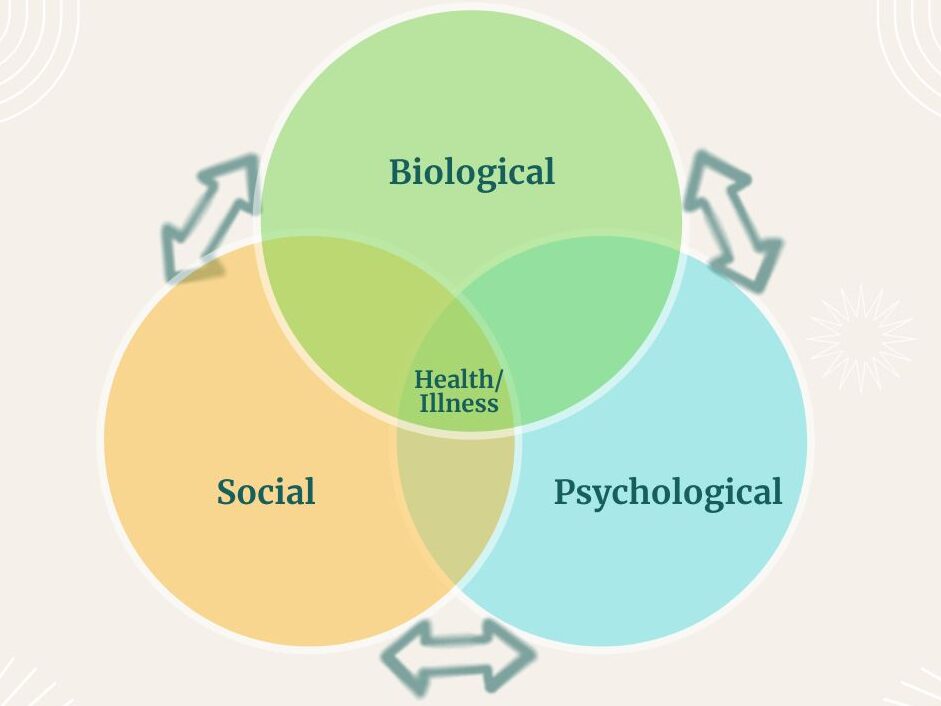
    The foundations of true holistic therapy lie in the biopsychosocial model of mental health, which posits that mental health is shaped by an interaction between three domains:

    1. Biological factors – this includes genetics, physical health, sleep, nutrition, exercise, medication, substance use, brain chemistry, hormones. If you are in pain, sleep deprived, haven’t eaten a vegetable or gone at least on a short walk in days, it’s difficult to feel positive emotions or connect with friends.
    2. Psychological factors – this is your thoughts, emotions, behaviors, coping styles, core beliefs, trauma history, stress management. If your stress level is sky-high, mood is low and thoughts are racing, it can be difficult to sleep, eat or otherwise take care of your physical health, and to socialize with others.
    3. Social factors – this includes your relationships, identity, religion or spirituality, community, discrimination/marginalization, socioeconomic status, work/study environment. If you can’t meet your basic financial needs, experience discrimination in your community, have a toxic work environment or are fighting with a close friend, it becomes very difficult to promote your physical or psychological health.

    Instead of asking: “What’s wrong with you”?, we want to ask “What happened to you, and what is happening to you now to cause your symptoms?”

    Take someone with anxiety, for example. Their symptoms might be influenced by biological factors such as a genetic predisposition (biological), perfectionistic thinking (psychological), and high pressure at work (social). Holistic therapy aims to address all of these.

    Let’s now take a look at how holistic therapy can address these different factors.

    Psychological factors

    Starting with the obvious, therapy is of course best suited to address psychological factors contributing to the symptoms. Therapy can help with modifying unhelpful thoughts, regulating intense emotions, as well as challenging negative core beliefs, treating symptoms of post-traumatic stress disorder, and learning new coping and stress management skills.

    Think: therapeutic approaches such as cognitive-behavioral therapy, acceptance and commitment therapy, schema therapy and EMDR. But, a holistic approach may also integrate yoga, breathwork, mindfulness practices here.

    Biological factors

    A holistic approach also aims to address changeable biological factors. In therapy, this takes place mainly in the form of helping clients make lifestyle changes: improving their sleep, nutrition and exercise habits, and reducing or regulating substance use. These factors are not to be underestimated: the impact of a healthy lifestyle on our mental health is massive, and this is why it is important to address these factors in therapy as much as possible.

    Sometimes, it’s easy to make these changes, but other times, it can be very challenging. For example, Problems with sleep may require intervention, such a CBT-insomnia, or in some cases, medication. Exercise can also be very difficult to start if you are suffering from depression, so it might be that some other factors may have to be addressed first. Therefore, medication belongs to this category as well, and can be a very important part of a holistic treatment approach in many different situations.

    Social factors

    Therapy cannot change your immediate environment, but it can help you make useful changes. For example, you can learn to set boundaries with others, learn social skills to help you integrate into your community, and practice conflict resolution skills to help manage your close relationships and improve your work environment.

    Bringing it all together

    Let’s return to our example of anxiety. A holistic treatment plan for this case might include the following:

    • Cognitive-behavioral therapy
    • Exercise programme
    • Sleep education and training
    • Reducing workload where possible
    • Medication
    • Breathing exercises and other coping skills

    Ideally, of course, treatment would take place in a multidisciplinary team that would include a psychologist, psychiatrist, personal trainer and nutritionist, who all collaborate to get the best possible treatment outcome. In practice, this is unfortunately rarely possible, and this is why it’s so important for a therapist to address the person as a whole, and make appropriate referrals or recommendations to other practitioners where relevant.

    Collaboration

    Another significant aspect of holistic therapy is that the client is an active participant in their own treatment. Together, the therapist and client will:

    • Set values-based and realistic goals for therapy
    • Adjust approaches in the process based on what is or isn’t working: this is where ongoing feedback is so important!
    • Revisit goals or expectations as life circumstances change

    Honesty from both parties is paramount: the client is responsible for doing their part of the work and communicating what works, as the therapist is responsible for using evidence-based practices, adjusting based on client needs, and ending therapy and referring out if they feel unable to help sufficiently.

    Therapy can’t fix everything

    An important tenet of holistic practice is also the understanding that therapy is not a miracle solution, and in some cases, might even be counterproductive. Therapy cannot, among other things:

    • Remove systemic stressors like housing insecurity, financial stress, visa issues, or discrimination
    • Replace medical care when it’s needed
    • Undo burn-out caused by ongoing overwork
    • Compensate for lack of community or social support

    It is also important to keep in mind that as it is now, therapy is a privilege that not everyone can afford. Barriers such as long waiting lists, lack of providers, lack of insurance and high costs of private therapists are not to be understated. Additionally, disability, neurodivergence, unsafe home environments or stigma can serve as significant accessibility concerns as well. Therapists can, and should aim to address these barriers, for example, by using needs-based pricing and working to improve the accessibility to improve their physical and online spaces. However, that does not address all these barriers.

    How to practice holistic care on your own

    1. Think in systems

    This means moving away from single-cause explanations for your symptoms. Instead of focusing only on what you are feeling, try to reflect what might be contributing to it across different domains. Even if there is a main cause, exploring contributing factors can still make a difference, especially if the main cause cannot be eliminated or changed.

    You might ask, for example:

    • Have there been any changes to my sleeping patterns?
    • Have I been more isolated from friends and family?
    • Am I in more pain than usual?
    • Am I using substances more frequently?

    Once you’ve identified changes or potential contributing factors, it’s time to get honest with yourself and see what you can work on. For example, you might not be able to improve your sleep times due to night shift work, but what you can do is improve your sleeping conditions, and use bright light therapy to help your circadian rhythm adjust. Similarly, you might be able to reduce alcohol consumption.

    2. Address lifestyle factors

    Mental health is inextricably linked to sleep, physical activity, nutrition and substance use. However, from a holistic lens, it’s important to avoid perfectionism or developing rigid rules: trying to optimize your entire life can actually lead to increased stress, obsessive and inflexible thinking, and shame and self-punishment when you ‘fail’ (e.g., don’t meet your steps goal for the week). Something is always better than nothing!

    Rather than aiming for optimal habits, try asking yourself?

    • Under current circumstances, what can I realistically change?
    • What feels like it’s having the most impact right now?

    When making lifestyle changes, it’s also important to go slow. Pick one habit at a time, and slowly build from there to avoid becoming overwhelmed.

    3. Build psychological skills

    There are many skills and tools you can use on your own to help increase self-awareness and notice your patterns. For example:

    • Journaling – this can mean simply writing about your day, stream-of-consciousness/emotional dumping type writing, gratitude journaling, or following specific prompts.
    • Practicing self-compassion
    • Focusing on emotion regulation skills

    4. Prioritize social connection

    Social factors are among the strongest predictors in positive mental health outcomes. With loneliness and lack of community on the rise, holistic self-care includes intentionally seeking out belonging and connection.

    This means making plans with friends and loved ones, seeking out community and third spaces where possible, and setting boundaries with people and spaces that consistently make you feel unsafe or unworthy. It means sharing what’s on your mind, allowing yourself to be vulnerable with your people, and allowing them to be vulnerable with you.

    This also means (without abandoning yourself) showing up for others when you’d rather be doing something else, and sometimes putting yourself in situations that can at first feel a little uncomfortable or scary.

    Self-care might not be enough (or it might feel too difficult), and this is where seeking therapy can be very beneficial.

    So, what does holistic therapy really mean?

    In practice, it looks like:

    • Seeing you as whole person, not as a diagnosis or symptom
    • Combining traditional forms of therapy with a variety of other interventions and practices
    • Personalizing treatment to each individual
    • Focusing on improving overall quality of life and wellbeing
    • Working together to find solutions

    If you’re curious about holistic, evidence-based therapy in Leiden, reaching out to a licensed psychologist can be a great idea.

    References

    Bolton, D. (2023). A revitalized biopsychosocial model: core theory, research paradigms, and clinical implications

    Bourke, M., et al. (2025). Clusters of healthy lifestyle behaviours are associated with symptoms of depression, anxiety, and psychological distress: A systematic review and meta-analysis of observational studies

    Chen, W.-J. (2016). Frequent exercise: A healthy habit or a behavioural addiction?

    Harandi, T. F., et al., (2017). The correlation of social support with mental health: A meta-analysis

    Patterson, E. H., et al. (2025). Public psychology and holistic approaches to prevention and treatment of depression

  • AI in Mental Health

    AI in Mental Health

    If you’ve ever used ChatGPT or a similar AI language model as a pseudo-therapist, you’re not alone. In fact, its one of the most common uses for AI today, as it can offer comfort and even companionship and an increasingly lonely world. For many, it has real benefits, but research suggests it also carries significant risks, especially when it comes to more complex mental health issues.

    What are the benefits? What can it do better than a human therapist?

    • Fosters positive emotions – always validating and empathetic
    • Memory – bots don’t forget, and can easily access information from previous sessions
    • Accessibility – free, available 24/7 instantly, doesn’t get bored, tired or distracted
    • Non-judgmental – many find it easier to reveal their secrets to a chatbot, instead of taking a chance that another person may judge them
    • Knowledge base – they know everything about everything, and can provide great psychoeducation and any resources the user may need

    What can it help with?

    • Structuring your thoughts – AI can help you make a framework for your thoughts and give structure to what you would like to say, for example, in a conflict situation. Plus, writing it out is a great way to process in any case.
    • Providing psychoeducation – if you need simple information about mental health or psychological disorders such as anxiety or depression, it can be a great starting point, or if you want to learn about specific therapeutic approaches, such as cognitive-behavioral therapy, schema therapy, acceptance and commitment therapy, internal family systems therapy, etc.
    • Offering coping skills – if you need specific coping skills to help you in a period of stress, AI can suggest some great options, just remember to take what you need and leave the rest.
    • Offering structured exercises and journaling prompts – do you want to journal but feel uninspired? Or maybe you’re looking for a connection-building exercise to do with your partner?

    Though these benefits are undeniable, keep in mind that if you do choose to use AI for the abovementioned tasks, remember its limitations, and proceed with caution.

    How can it hurt?

    Lack of the ‘human’ skills needed for therapy

    Across decades of psychotherapy research, one factor consistently predicts positive outcomes more than any specific technique: the therapeutic relationship, which is fundamentally a human social relationship. A psychologist can read body language, notice emotional shifts, offer empathy, and, importantly, know when to challenge instead of simply validate you.

    AI models are there to make money, and therefore are designed to keep you satisfied and engaged, causing an inability to provide criticism, which is a crucial part of therapy.

    Stigma and bias

    AI chatbots across the board show increased stigma for conditions such as alcohol dependence and schizophrenia. This is equally true for more complex and newer models, so simply ‘more data’ is not the solution here. Additionally, since AI systems are trained on human feedback, they often reflect the dominant demographic, therefore lacking understanding of nuanced experiences related to gender, sexuality, race, culture, neurodivergence or socioeconomic background. And while it is true that humans are biased in this way too, they have the potential to adapt based on lived clinical experience.

    Privacy and ethics

    These conversations are not protected by confidentiality like therapy sessions are, and your data may be collected for training bots and marketing, as well as other unauthorized use, identity theft, and scamming. There is also a lack of quality control, clinical oversight or meaningful external regulation.

    Dependence

    The 24/7 availability and validating nature can cause addiction and social isolation: since real human contact is often messy and imperfect, an AI companion can offer a security blanket. With loneliness already on the rise, this a real risk. This sort of on-demand emotional validation can also undermine resilience and autonomy, especially if you already have anxiety or low self-esteem.

    When does it become truly dangerous?

    Enabling distorted thinking

    Chatbots don’t deal well with chaotic and unpredictable situations, which is where human intuition has a great advantage. When it comes to complex mental health conditions, such as bipolar disorder, schizophrenia, psychosis, suicidality, self-harm, eating disorders, antisocial and aggressive impulses or delusions, engaging with AI can have devastating effects.

    The chatbots’ tendency to always validate may cause it to reinforce dangerous or delusional thinking, and encourage the user to act on their impulses. Even for those with milder issues, AI can encourage fallacies like catastrophizing or minimizing, instead of gently correcting them, as a therapist would.

    Crisis situations

    Since AI cannot assess whether the user’s view of reality is accurate, it might, for example, give a suicidal person detailed information on the highest buildings in their area, or encourage a frustrated teenager to cut their parents off. AI can’t know when one might need a higher level of care, or when to call emergency services. And the consequences can be catastrophic.

    So, ultimately, what’s the role of AI in mental healthcare?

    Like it or not, AI is here to stay, but it should be treated as a substitute, not a replacement for therapy, by therapists and clients alike. It can help you reflect, organize your thoughts, and bridge the gap where the human therapist is unavailable. However, as it stands today, it cannot and should not act as a primary provider, especially in high-risk situations.

    If you are struggling, be it with anxiety, depression, burn-out, identity questions, relationships, or feeling disconnected, speaking to a licensed psychologist remains the safest and most effective option. Technology may support mental health, but healing still happens in relationship.

    References

    Jesudason, D., Bacchi, & Bastiampillai, T. (2025). Artificial intelligence (AI) in psychotherapy: A challenging frontier

    Kuhail, M. A., et al. (2025). Human-Human vs Human-AI Therapy: An Empirical Study

    Moore, J., et al. (2025). Expressing stigma and inappropriate responses prevents LLMs from safely replacing mental health providers

    Olawade, D. B. (2024). Enhancing mental health with Artificial Intelligence: Current trends and future prospects

  • Asking for What You Need

    Asking for What You Need

    We all have different needs, and in an ideal world, we would get them met with ease, and feel no shame in accommodating ourselves. However, many of us have learned that having needs=being needy, from experiences in childhood with our caregivers, at school with teachers and peers, or from our first romantic relationships. This is especially true for neurodivergent people, and even more so if they were only diagnosed later in life.

    I am going to start with a personal anecdote – I recently was on vacation in a busy city, and while I was very happy to be there, I found myself getting quite overwhelmed by the sheer amount of people and noise that surrounded us. This is not news – I know I don’t deal well with noise and normally use noise-cancelling headphones when alone in these kinds of situations. However, since I was with a group of friends, I resisted getting them, for fear of seeming rude, antisocial, and even weak. However, as time went on, I found myself becoming more and more silent (and therefore, actually running the risk of seeming rude or antisocial!) as I got more and more overwhelmed. At some point, I decided to just wear the headphones, and it made my experience SO much better, and I was able to be present for my friends way better as well. But this got me thinking, why was it so difficult for me to make use of an accommodation that I know I need, with people who care about me and my wellbeing?

    The answer? Shame. And I want here to focus specifically on neurodivergent people.

    From a young age, many neurodivergent people are praised for “coping well” or “managing without help.” Over time, this creates deep shame around needing support at all (internalized ableism). And so you pretend you don’t need it. Psychologists call this masking—suppressing or compensating for neurodivergent traits to avoid social stigma. Masking is often protective, but it’s also exhausting. And when we hide our needs too long, burnout can follow.

    Therefore, asking for accommodations can feel risky, as you may fear that they are seen as special treatment, or you may be seen as lazy, difficult, or weak. However, let’s try to reframe accommodations as tools for access and self-knowledge, rather than privilege or special treatment.

    Here are a few examples:

    For ADHD: using noise-cancelling headphones, breaking tasks into smaller steps, or requesting clear written instructions.

    For autistic people: asking for predictable routines, avoiding sensory overload, or clarifying social expectations.

    In social life: asking friends to text instead of call, meeting in quieter places, or giving yourself permission to leave early.

    And here are a few practical tips:

    1. Name your needs clearly, even if just to yourself. Awareness is the first step to communication.
    2. Notice when you’re being too harsh on yourself and ask yourself: “Who’s standards am I trying to meet?”
    3. Practice asking for help in a safe environment – this could be with a specific person, such as a partner or close friend, or even in therapy.
    4. Start small – ask for one small accommodation and go from there.
    5. Connect with others – either online or in-person, seek out connection and community with other neurodivergent people. This will not only provide you with support, but also helps normalize asking for help. You can also brainstorm ways of asking for help with others.

    If you struggle with this, therapy can also help you identify the roots of shame and learn to treat your needs as legitimate. Several evidence-based approaches can be particularly effective:

    • Compassion-Focused Therapy (CFT) helps soften self-criticism and reframe shame as a universal human emotion rather than a personal flaw (Gilbert, 2010).
    • Acceptance and Commitment Therapy (ACT) focuses on living according to your values—even when fear or shame shows up (Hayes et al., 2012).
    • Internal Family Systems (IFS) or Schema Therapy can help uncover the “parts” of you that feel undeserving, lazy, or afraid of burdening others, and bring compassion to them.

    Therapy also provides a practice ground for asking for accommodations—a space to explore what it feels like to express needs without fear of judgement.

    In short, asking for what you need is not a weakness, even if it feels that way at first. Reasonable accommodations can help you enjoy your life a lot more and avoid burn-out, and it’s worth learning effective communication about your needs!

    References

    Botha, M., & Frost, D. (2020). Autistic masking and the double empathy problem: Mental health and authenticity. Autism in Adulthood.

    Brown, B. (2006). Shame resilience theory: A grounded theory study on women and shame. Families in Society.

    Gilbert, P. (2010). Compassion Focused Therapy: Distinctive Features. Routledge.

    Hayes, S. C., Strosahl, K. D., & Wilson, K. G. (2012). Acceptance and Commitment Therapy: The Process and Practice of Mindful Change. Guilford Press.

  • Get into awe

    Get into awe

    Feeling stuck, disconnected, depressed? Unsure what you want from life, unfulfilled, but don’t know what to do about it?

    Let me ask you this: have you ever felt a sense of completeness, fulfilment or peace standing while looking at a beautiful sunset or at a concert, completely mesmerized by the sense of community along with the music you grew up with? Then, you have experienced awe. Awe as am emotion arises when we encounter something vast or ‘beyond us’ – think nature, collective gatherings, music, art, spiritual experiences, birth or death, or psychedelic experiences, for example. Awe makes you stop, wonder, and forget about yourself and your daily routine or annoyance for a second, and helps you see the bigger picture.

    There is research out there suggesting that experiencing awe can increase both our mental and physical wellbeing.

    A study by Monroy & Keltner (2022) proposed five pathways to how this works:

    1. Physiological changes – in simple terms, awe reduces the activation of our sympathetic nervous system (this means your fight or flight response), increases the production of oxytocin (the love hormone) and reduces signs of inflammation in the body.
    2. Reduced focus on yourself – feeling like you’re a part of something bigger rather then focusing on your imperfections
    3. Increase in prosocial behaviour – this means increased generosity and helping others, which make you feel much better, too!
    4. Increased feeling of connection with others – and this common humanity increases our empathy and helps us connect with our social environment.
    5. Increased sense of purpose or meaning in life – again, seeing the bigger picture!

    Awe experiences thus reduce anxiety, depression and stress – and promote optimism, resilience and a sense of connection and meaning in life – the antidote to disconnection! Additionally, a reduction in physical stress can lead to improved cardiovascular health and longevity.

    Of course, these experiences can be rare, especially in our fast-paced society – who’s got the time to slow down and really take in our surroundings? Well, I say – make time. For your own good, and for your loved ones and society at large.

    But how?

    1. Seek out awe experiences, big and small. Below is an example list of things to try:

    • Spend time in nature – This could mean taking a holiday, or simply going for a bike ride or walk near where you live. It can be especially powerful if you live in a big city, or where there aren’t a lot of opportunities for getting away (The Netherlands is great – but we do have a lack of forests!)
    • Go to a concert – Either with friends or by yourself, the experience of listening to your favorite music alongside others who feel the same way, can make you feel more connected to humanity, almost like a trance-like state.
    • Watch the sunrise or sunset on a beach – While this may require either getting up very early or going to bed late. the payoff is great.
    • Look at the starts and constellations at night – For night owls, or if you can’t sleep, this can help you feel more connected to the universe, and see yourself as just one amazing part of it.
    • Attend an art installation – Creativity elicits awe, and it might even awaken your own desire to create!
    • Listen to music loudly at night – Bonus points if it’s while you’re walking alone (as long as it’s safe, of course), or dancing in your room
    • Share, or listen to stories of great human achievement or kindness – With so much tragedy in the world, sometimes it’s nice to tune out of that and look on the other side.

    2. Practice mindfulness and being truly present in the moment – so you don’t miss out on everyday wonders!

    Awe is course only one piece of a very complicated puzzle. Improving your mental health is not straightforward and never one-size-fits all. In addition to increasing everyday wonder, you might also want to seek therapy and learn new skills. In addition, if you are very stuck or depressed, even the most beautiful of sunsets may fail to evoke the coveted feeling of awe. However, if you can, try it. It might just improve your outlook.

    References

    Monroy, M., & Keltner, D. (2023). Awe as a Pathway to Mental and Physical Health. Perspectives in Psychological Science.

  • Social Learning (And More!)

    Social Learning (And More!)

    I am going to tell you a personal story about food and ask you to bear with me – it’s relevant, I promise!

    Growing up in post-Soviet Estonia, I had a lot of experiences that I’ve found only fellow Eastern-Europeans can relate to, but one of the more trivial things I’ve been thinking about lately is just how little I knew about food – as something other than basic sustenance. My parents, bless them, grew up in conditions of lack and therefore, among other things, got used to a diet of potatoes and plain white rice. They both worked full-time throughout my childhood and found no joy in culinary endeavors. What’s more, anything new and exciting was regarded as suspicious, or even dangerous.

    And that is how I found myself the subject of many strange looks from roommates when they watched me eat plain pasta during my studies, how I learned that a salad can actually include a dressing and need not be a simple concoction of cucumber and tomatoes. All at the ripe age of 20-25!

    What was going on here? Social learning.

    I had not been exposed to much, so I simply was unaware of what else is out there. Additionally, from a young age, I learned that any new foods are not to be trusted. So, at the start of my adult life, I followed the same principles. That, along with the fact that like my parents, I derived no joy from cooking, left me eating a pretty sad ‘white girl’ diet, devoid of any spice, splash, or joy.

    Social learning, however, also took me to the other side. I’ve had the joy of meeting people passionate about food, of meeting people from different cultures who introduced me to their cuisine, of finally learning to cook for myself. And my god, what I was missing out on! It turns out that I’m not even a picky eater in the slightest.

    I tell this story as it is a great illustrator of several important concepts in therapy, and in life. Through no fault of our own, we not only have preferences, but also biases and learned ways of behaving.

    1. Your upbringing plays an incredibly major role in who you become. In my example, the problem wasn’t just that I was not exposed to other cuisines, it was also that anything different was actively shunned. Food is quite innocuous, of course, but what if you’re shamed for how you look or how you act? What if you learn harmful behaviours, such as aggression or emotional suppression? And even further, what if you learn harmful beliefs about others in a racist, sexist or homophobic home, for example?
    2. The good news is that what’s learned can be unlearned – and if your beliefs are actively harming you, others, or groups of people, I might even argue that it is your responsibility to unlearn them. For me, it took some time, but thanks to the right social conditions (friends with culinary talent) and encouragement, I got over my fear of anything spicy or joyful. While it is true that I am still not am amazing cook, I am now willing to think outside the box. Similarly, one can unlearn
    3. For this unlearning to take place, you need to be able to get out of your comfort zone. I was fine eating plain pasta and unseasoned chicken breast. Comfortable. But seeing now, what all would I have missed out on had I not dared to try. Growth is always uncomfortable, and whether it’s adding a singular red pepper to your food (scandalous!) or unlearning deep-seated beliefs about yourself and the world, it’s always worth it.

    I am going to leave you with a well-known example.

    Steve has learned to hide his emotions and always seem strong from an early age, mostly due to societal conditioning and ideas about masculinity. He therefore, after experiencing a traumatic event, is less likely to seek therapy and views it as something that is meant for people who have ‘something wrong with them’. However, Steve meets a new group of friends during his studies, many of whom are male and go to therapy, and encourage him to do so as well. He becomes interested, and contacts a therapist. Even though he is very sceptical, he decides to give it a try for at least 4 sessions. It takes him a while to warm up, but luckily the therapist is very encouraging and takes their time, and slowly Steve finds the experience more and more helpful, and is glad he took the first step And this is exactly how different social norms and a skilled therapist helped Steve get over his fear of going to therapy, and he is now even beginning to question other societal messages of what a ‘masculine man’ should look like.

    Generation preferences, biases and trauma are deep-rooted, but can be unlearned, to great benefits. And therapy is a wonderful place to explore that, whether you’re looking to learn to eat different foods, or working though some serious problems, support is always available.

  • Cultural Lens of the Therapist

    The cultural lens refers to the way a therapist’s own cultural background, values, and lived experiences influence their perspective on mental health, relationships, and emotional well-being. No one operates in a vacuum—both therapists and clients bring their unique cultural identities, beliefs, and biases into the therapeutic space.

    When these factors align well, therapy can be a transformative and deeply validating experience. When they don’t, misunderstandings can occur that impact the therapeutic relationship and treatment outcomes. While of course, your therapist does not need to share your cultural background, it might help if they do, and if you’re lucky enough to find one, it can be a better experience than, for example, speaking to someone who has no personal experience with it. However, this is not always possible, which is why finding a culturally competent therapist is so important, someone who is aware of and adapting to your specific needs.

    This lens affects:

    ✔ How mental health symptoms are understood (e.g., is distress framed as an individual issue, a relational problem, or a societal challenge?)
    ✔ How emotions and coping strategies are perceived (e.g., is crying seen as a healthy release, or a sign of dysfunction?)
    ✔ What is considered “healthy” or “normal” in different cultural and psychological contexts
    ✔ How therapy techniques are applied (e.g., an emphasis on self-exploration vs. practical solutions)

    A self-aware therapist acknowledges their own cultural lens and how it might shape their biases and therapeutic approach. They are able to adjust their framework to better understand and support their clients’ unique experiences rather than imposing their own perspectives onto the client.

    Why This Matters

    🔹 Alignment of values can enhance connection. If a therapist and client share similar values or life experiences, it can create a natural sense of trust and understanding.

    🔹 Unexamined biases can create disconnect. If a therapist unconsciously views a client’s way of thinking or coping as “wrong” based on their own worldview, the client may not feel heard.

    🔹 Cultural self-awareness improves adaptability. A therapist who is aware of their own assumptions and biases can be more flexible and responsive to clients with different perspectives.

    Common Cultural Gaps in Therapy (And How to Bridge Them)

    Sometimes, therapists and clients come from very different cultural or psychological perspectives, which can create misunderstandings. Below are some common cultural gaps and ways therapists can bridge them.

    1. Different Views on Emotional Expression

    In Western psychology, verbalizing emotions is often seen as healing, but in some cultures, keeping emotions private is a sign of strength. A therapist needs to therefore recognize when emotional expression is helpful and when it is uncomfortable for a client.

    🔹 Bridge the gap: Instead of assuming clients should “open up” in a certain way, therapists can explore different methods of expression, such as journaling, creative arts, or mindfulness practices.

    2. Individual vs. Collective Worldview

    Some clients (especially from Western cultures) prioritize self-exploration, independence, and personal growth. Others (from collectivist cultures) may prioritize family, community, and social harmony over individual needs. A therapist unfamiliar with these values might push for “self-discovery” when the client actually wants guidance on navigating relationships and responsibilities.

    🔹 Bridge the gap: Therapists can explore how clients define well-being and adjust interventions accordingly, rather than applying a one-size-fits-all approach.

    3. Stigma Around Therapy

    In some cultures, seeking therapy may be seen as a last resort for severe illness, rather than a proactive step toward well-being. Some clients may therefore feel hesitant or guilty about seeking support.

    🔹 Bridge the gap: A therapist can normalize therapy by framing it as a strength-based process and emphasizing its role in personal growth, stress management, and resilience-building.

    Finding a Culturally Competent Therapist

    If you’re seeking therapy, consider:

    ✅ Does this therapist understand my background and values?
    ✅ Do they seem open to different ways of thinking and healing?
    ✅ Are they self-aware about their own perspective and potential biases?
    ✅ Do I feel seen, respected, and understood in our sessions?

    Therapists don’t have to share your exact identity or experiences to be effective—but they do need to be culturally aware, adaptable, and committed to understanding your perspective.

    So, if you’re looking for a psychologist in The Netherlands who emphasizes cultural humility and an individualized approach—Bloomwave has you covered. Whether you’re dealing with symptoms of depression, anxiety, overwhelm or conflict in your relationships, help is available.

  • A Queer-Inclusive Approach to Therapy

    A Queer-Inclusive Approach to Therapy

    What Does It Mean to Be Queer-Inclusive in Therapy?

    Queer-inclusive therapy is more than just being open to LGBTQ+ clients. It’s about actively addressing the specific needs, challenges, and strengths of people across the spectrum of gender and sexual identities. This approach recognizes that identity and mental health are deeply connected, and it celebrates the diversity of each person’s journey.

    This leads us to the idea of ‘queering psychotherapy’, which is all about questioning traditional norms in therapy.

    With this in mind, we strive to:

    • Challenge heteronormativity
      Making the therapy context a safe space free of normative assumptions.
    • Embrace intersectionality
      Your identity is multifaceted, shaped by intersections of race, culture, socioeconomic background, ability, and more. Queer-inclusive therapy takes into account the richness of your experiences and how they interact with your mental health.
    • Empower self-definition.
      Rather than imposing labels or frameworks, we prioritize your power to define yourself on your own terms, making sure you feel seen.

    The benefits of a queer-inclusive practice

    1. Addressing Unique Challenges

    LGBTQ+ individuals often face unique stressors, including discrimination, rejection, and internalized stigma, that can profoundly impact mental health. A LGBTQ+ affirmative approach recognizes these realities and creates a safe space to explore them without judgment.

    2. Combating Minority Stress

    Minority stress can manifest in anxiety, depression, and other mental health problems. Therapy offers tools to navigate and heal from these experiences.

    3. Creating Affirming Spaces

    A safe space where one feels affirmed and respected in therapy lays the groundwork for meaningful progress.

    How to find a queer-inclusive therapist?

    Finding a suitable therapist can be a stressful experience, as you may wonder: Will I have to explain myself and teach the therapist about my identity? Will I be judged? For this reason, it’s important to do some more research into different therapists, and look beyond the LGTBQ+ friendly label. It might be important for you that the therapist is queer themselves, in which case, search for someone who has that explicitly stated on their website.

    Here’s some additional tips:

    1. When exploring the therapist’s website, look for language that signals affirmation: can you find phrases such as inclusivity, intersectionality. Do they have their pronouns on their website? Do they have any information about working with queer people specifically? If yes, that’s usually a good sign.

    2. See what their stance on non-normative relationships is, are they curious about non-traditional life paths? If you see mentions of ENM or polyamorous relationships, for example, it’s a good sign that they won’t assume defaults when it comes to your relationships and life choices.

    3. Check whether they value collaboration. This is signaled by phrases such as client-centered, collaborative, or integrative, and suggests they will be willing to adapt their approach and check in with you every step of the way.

    4. Don’t only rely on the website, but use the first consultation to check for test the fit:

    • Do they ask for your pronouns, and use them correctly without hesitation? Do they offer their own without you having to ask?
    • Are they comfortable and when you mention queerness and your relationship style? Do they seem educated on these topics?
    • Do they use gender-neutral language, such as ‘partner’, rather than boyfriend/girlfriend or husband/wife? Do they stay curious, rather than making any assumptions?

    If you can answer yes to these questions, it’s likely you’re in good hands. Make sure to also listen to your gut feeling, if something ‘feels off’, even if you can’t put a finger on it, it might be worth looking into a different therapist. Additionally, even if you’ve already had a couple of sessions, if something feels off, you are allowed to stop seeing them, if addressing it with them does not feel safe to you – an inclusive therapist should always take your feedback into account.

    Queering Therapy Beyond LGBTQ+ Clients

    Queering psychotherapy isn’t just for LGBTQ+ individuals—it’s a mindset that benefits everyone. By challenging traditional frameworks, this approach invites all clients to explore their identities and deconstruct societal norms.

    For example:

    • A cisgender, heterosexual client might explore how traditional expectations of masculinity have affected their mental health.
    • A client in a non-traditional relationship structure such as polyamory will find therapy a safe and nonjudgemental space.

    Queering therapy promotes inclusivity and awareness across all aspects of life and relationships.

    The Path Forward

    A queer-inclusive approach to therapy is about more than just creating a safe space—it’s about building a future where everyone can thrive as their authentic selves. At Bloomwave, we’re here to support you, whether you’re navigating the complexities of identity, healing from stigma, or simply looking for a therapist who understands and affirms you.

    References

    Tilsen, J. (2021). Queering Your Therapy Practice: Queer Theory, Narrative Therapy, and Imagining New Identities

    Tilsen, J., & Nylund, D. (2010). Resisting normativity: Queer musings on politics, identity, and the performance of therapy

  • Why Expats Benefit from Therapy

    Why Expats Benefit from Therapy

    So you made the courageous decision to move abroad – packed up your life and found yourself in a completely new situation. Living as an expat, or immigrant, in the Netherlands can be an incredibly enriching and rewarding experience, especially in beautiful student cities like Leiden or Delft, but it also brings a new set of unique challenges that many expats may find difficult to navigate. You might struggle with the language barrier, miss friends and family back home, or find it difficult to adjust to the Dutch way of living. Therapy can provide essential mental health support to help you bloom in your new home.

    Especially if your move is permanent (or just more longer-term), you may grapple with the ramifications of leaving behind your old life, friends and family. Parents and grandparents get older, children in the family grow up, and this is something you no longer can witness as closely as you used to be. You might feel torn: on one hand, you really want to focus on building a new life and future for yourself in your new environment, and on the other hand, really miss what you left behind, and feel the desire to be close to family as they age. All of this is very complicated, and feeling alone in the dilemmas can easily become overwhelming.

    Here are five reasons why therapy can be invaluable for expats:

    1. Navigating cultural adjustment

    Moving abroad often means having to adjust to different social and cultural expectations, language barriers, and even the weather. You may find that people in the Netherlands are a bit more direct than you’re used to or struggle with finding housing or arranging healthcare, for example. These frustrations may snowball into feelings of depression, anxiety or loneliness. This is where a culturally-informed English-speaking therapist can come in to help. At Bloomwave, we know first-hand what’s it like to be an expat in the Netherlands, and have experience in navigating many of the practical challenges you may be facing as well.

    2. Managing loneliness

    Becoming an expat of course means leaving your old support system of friends, family and other loved ones behind, and being faced with the task of forming a new social network and keeping long-distance relationships alive. Loneliness is one of the most common mental health problems among expats, and especially in the Netherlands, you may find it difficult to integrate into already-formed Dutch social systems. Therapy can help you work through these feelings of isolation and learn new ways of coping with them. Additionally, therapy helps you improve your communication and relationship skills that are invaluable in finding community abroad, but also in strengthening your relationships with people back home.

    3. Exploring your identity

    Moving abroad might also challenge your identity in both positive and negative ways – you may start to question old values or develop new beliefs. You may not feel like you’re from anywhere, for example, and this leads to a lot of confusion. At Bloomwave, we believe in the power of therapy in really helping you understand yourself and what it is you want out of life. Through various methods, such as Acceptance and Commitment Therapy, we can help you make sense of your new identity and empowers you to live more fully.

    4. Addressing mental health stigma

    For many expats, seeking therapy can feel like stepping into uncharted territory, particularly if they come from cultures where mental health support is stigmatized. The Netherlands, however, offers a progressive and inclusive environment where therapy is widely accepted and accessible.

    At Bloomwave, we’re dedicated to creating a welcoming, nonjudgmental space where you feel safe to explore and grow. Our intersectional, anti-racist, anti-ableist, and LGBTQ+ affirming approach ensures that therapy is tailored to your needs and values. We can even address internalized stigma and help you normalize seeking support during our sessions.

    5. Coping with work or study stress

    On top of navigating new cultural environments, expats in the Netherlands often experience higher levels of work or study stress. Balancing studies with personal life may often lead to feelings of anxiety and overwhelm. Likewise, adapting to a new job and work culture, or dealing with career insecurity is a common challenge for expats. If unmanaged, these issues can lead to burn-out. In therapy, you can work on adjustment to new challenges, building routines that work for you on an individual level and learning new stress management techniques.

    Becoming an expat is a challenging experience – you should not have to face this alone. Through therapy, you can learn valuable skills to make the most of your life in the Netherlands and turn your challenges into success stories.

    References

    Platanitis, P. (2018). Expatriates emotional challenges and coping strategies: A qualitative study

    Djundeva, M., & Ellwardt, L. (2020). Social support networks and loneliness of Polish migrants in the Netherlands

  • Why Therapy Works: The Key Ingredients

    With so many different therapeutic modalities, approaches and techniques out there, one can find themselves quite confused – which is best? What should I choose?

    The good news is that there is no right or wrong answer – research shows that what truly makes therapy work goes beyond methods and theories—it’s about hope, connection, and the strengths clients bring to the process.

    So, what makes therapy effective? And how can I get the most out of it?

    1. The Therapeutic Relationship (30%)

    One of the most critical factors in successful therapy is the therapeutic relationship—the connection between therapist and client. Research shows this accounts for about 30% of therapy’s effectiveness.

    This is why finding the right therapist for you is so important – what matters is that you feel safe, respected and understood.

    A strong therapeutic relationship is built on:

    • Trust – Feeling safe to open up without fear of judgment.
    • Empathy – Knowing your therapist truly understands and validates your experience.
    • Collaboration – Working together as a team to navigate challenges.

    Finding a therapist who makes you feel heard and supported is more important than choosing a specific technique. So, if you’re looking for English-speaking therapy in the Netherlands, prioritize connection over method.

    2. The Client’s Own Strengths & Resources (40%)

    The biggest factor in therapy success is YOU.

    Clients bring their own resilience, strengths, and life circumstances to the table, and these factors account for 40% of therapy’s success. No matter how skilled a therapist is, real change happens when clients engage with the process, apply insights to their daily lives, and use their own resources to grow.

    This is actually great news because it means you have more control over your healing journey than you might think. Therapy isn’t about a therapist “fixing” you—it’s about uncovering and strengthening the tools you already have.

    3. The Role of Therapeutic Techniques (15%)

    When looking for a therapist in the Netherlands or searching for the best therapy techniques, many people focus on approaches like CBT (Cognitive Behavioral Therapy), Schema Therapy, or Acceptance and Commitment Therapy (ACT). These techniques matter, but they only account for about 15% of therapy’s success.

    Why? Because therapy isn’t one-size-fits-all. A skilled therapist adapts techniques to fit your needs, making therapy a personalized process. While CBT for anxiety or depression, or schema therapy for emotional regulation or stress management can be effective, what really matters is how well the approach aligns with the client’s unique situation.

    So if you’re searching for the most effective therapy, remember: it’s not just about the method—it’s about how it’s used in the right context.

    4. The Power of Expectation & Hope (15%)

    One of the most overlooked factors in therapy is simply believing that change is possible. Studies show that a client’s expectations—sometimes called the “placebo effect” or “expectancy effect” in therapy—play a huge role in success. If you walk into therapy with a sense of hope, you’re already increasing your chances of improvement.

    Simply put, when you believe that therapy can help, it increases your chances of seeing positive change. This isn’t just wishful thinking—it’s backed by psychology. When people enter therapy with hope for personal growth and expectations of improvement, they’re already setting themselves up for success.

    So if you’re considering therapy but feel skeptical, remember: being open to the process and allowing yourself to believe in change can significantly enhance your results.


    How to Get the Most Out of Therapy

    If you’re searching for how to make therapy work better or how to get the best results from therapy, here are a few tips:

    • Find a therapist you connect with. Whether you need online therapy in the Netherlands or in-person sessions, prioritize connection.
    • Be open to the process. Even if therapy feels uncomfortable at first, trust that growth happens in that discomfort.
    • Engage outside of sessions. The real work often happens between appointments—apply what you learn to daily life.
    • Give it time. Therapy isn’t an instant fix, but consistent effort leads to lasting change.

    Whether you’re dealing with anxiety, depression, relationship challenges, or life transitions, therapy offers the tools and support to help you navigate your journey. And this is exactly what we aim to offer at Bloomwave.

    References

    Hubble, M. A., Duncan, B. L., & Miller, S. D. (Eds.). (1999). The heart and soul of change: What works in therapy.

    Wampold, B. E., & Imel, Z. E. (2015). The great psychotherapy debate: The evidence for what makes psychotherapy work